Tag: grief

  • The MS Breakthrough That Probably Isn’t For Me

    Living with multiple sclerosis teaches you to recognize certain buzzwords. You start to hear them so often they become background noise: “New treatment option!” “Promising trial results!” “Exciting breakthrough just around the corner!”

    If you’re in the relapse-remitting stage, those words sound like a lifeline. A new infusion, a fresh pill, something to shove the beast back into its cage, at least for a while.

    But the moment that diagnosis shifts to secondary progressive MS, the soundtrack changes. The anthem of resilience fades out, and what’s left feels like elevator music on endless repeat. That’s when the words you never forget come crashing in:

    “There’s less we can do now.”

    Translation? Good luck out there
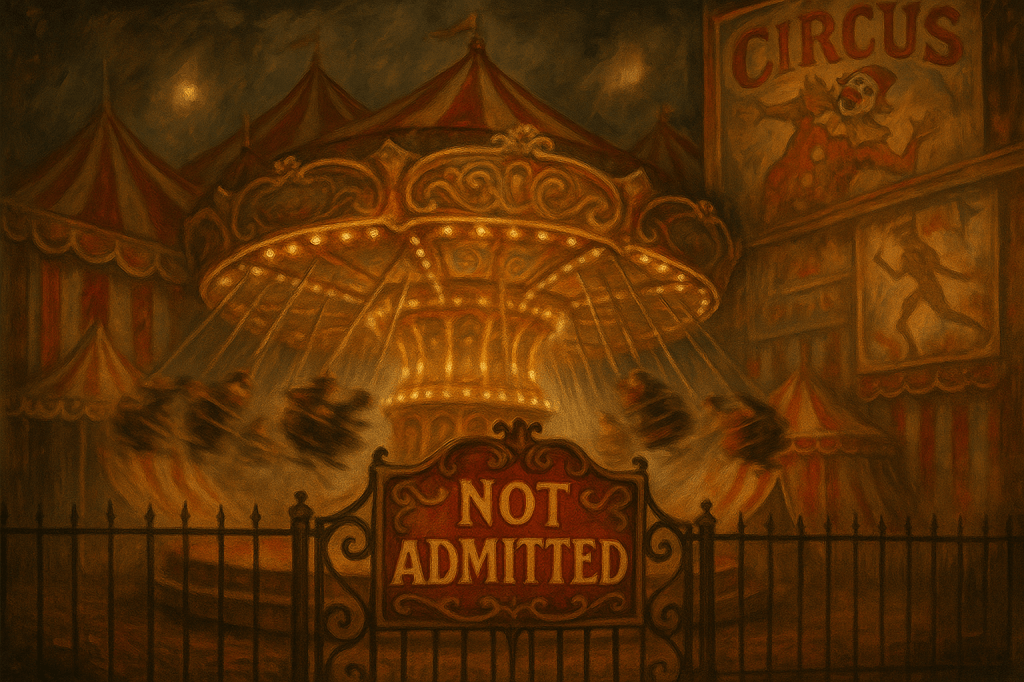
    Welcome to Treatment Limbo

    With SPMS, the treatment menu shrinks. Some drugs you once relied on get crossed off. Others aren’t even recommended anymore. Clinical trials? Suddenly, you don’t fit the criteria.

    And it makes you wonder: who does fit the criteria? Olympic athletes with a touch of MS that clears up after a nap? Because it sure doesn’t seem like they’re looking for people like me.

    Meanwhile, the news cycle parades shiny headlines: “Scientists discover potential MS breakthrough!” You want to cheer. You want to believe. And then comes the fine print: “Results apply only to early relapse-remitting patients under age 25 who have never sneezed on a Tuesday.”

    So, once again, it’s another party I’m not invited to.

    The Weight of Waiting

    Hope doesn’t die with SPMS, but it turns into a scarce resource. You learn not to get too excited about bold announcements, because nine times out of ten, SPMS patients aren’t even mentioned.

    It’s like standing outside a candy shop, watching everyone else sample treats, while the shopkeeper tells you: “Maybe next decade for you.” Eventually, you stop pressing your face to the glass, not because you’ve stopped craving it, but because the cold feels humiliating.

    But still, you don’t stop hoping. You just fold it up and keep it in your pocket, careful not to let it break.

    Everyday Decisions in Limbo

    Treatment limbo isn’t just about medication. It creeps into everyday choices:

    • Should I spend money and energy on home modifications now, or keep waiting for the miracle cure the headlines keep promising?

    • Do I risk enrolling in a dangerous trial, or protect what little stability I have left? “Possible side effects” sounds scarier when your baseline already feels like a car crash.

    • Is it even worth planning five years into the future, or am I just daring fate to laugh in my face?

    Living in limbo means constant mental gymnastics. And honestly, I couldn’t land a cartwheel even in middle school.
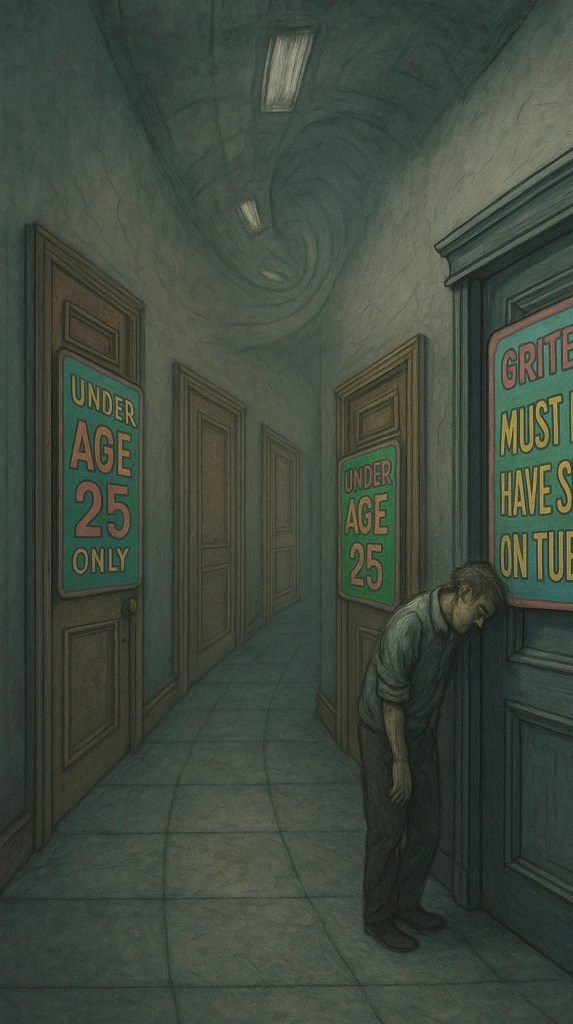
    What Rarely Gets Said

    Yes, science is advancing. But here’s the part you rarely see in print: behind every glossy “breakthrough” headline are people like me, waiting and wondering if this one will finally count, or if we’ll be left out again.

    That’s the silence of SPMS. Not hopelessness. Not despair. Just hope left hanging in the air, suspended and untethered.
    My Closing Thoughts

    The hardest part of SPMS isn’t the absence of a cure. It’s the gap between what gets reported and what we actually live.

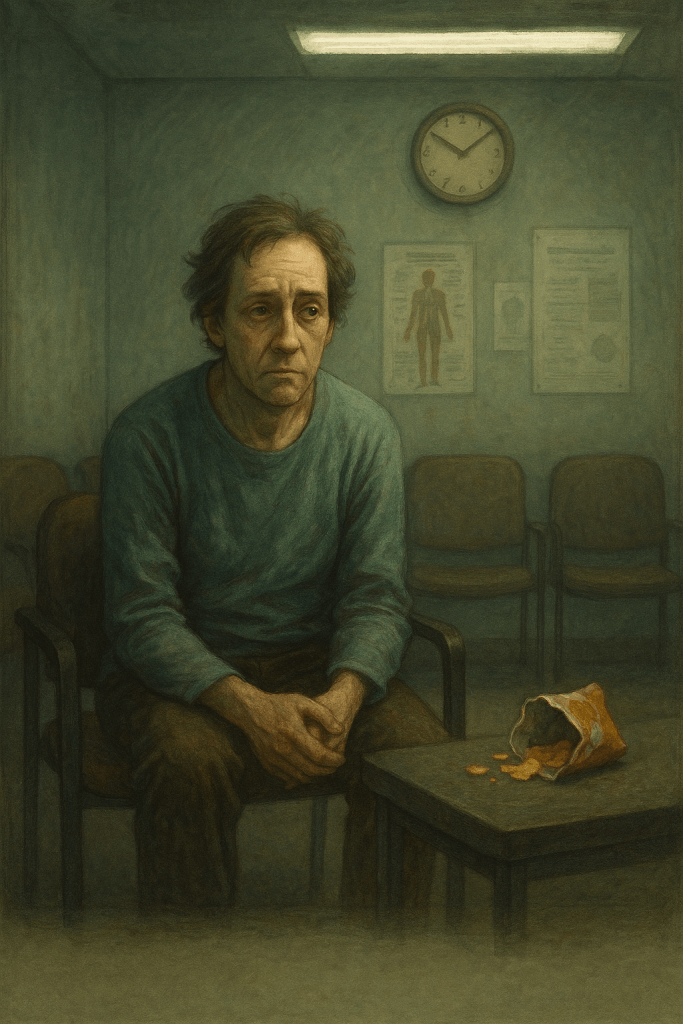
    So if you’re here in this waiting room with me, welcome. There are snacks (mostly sarcasm). If you’re not, remember this: every headline about “hope for MS” doesn’t mean hope for everyone with MS.

    Until then, I’ll keep rationing my hope, cracking my bad jokes, and shaking my fist at the medical fine print. Because really, if you can’t laugh at the absurdity of being excluded from the cure for the disease you actually have, then what else is left?
  • A Journey Through Loss, Resilience, and Joy

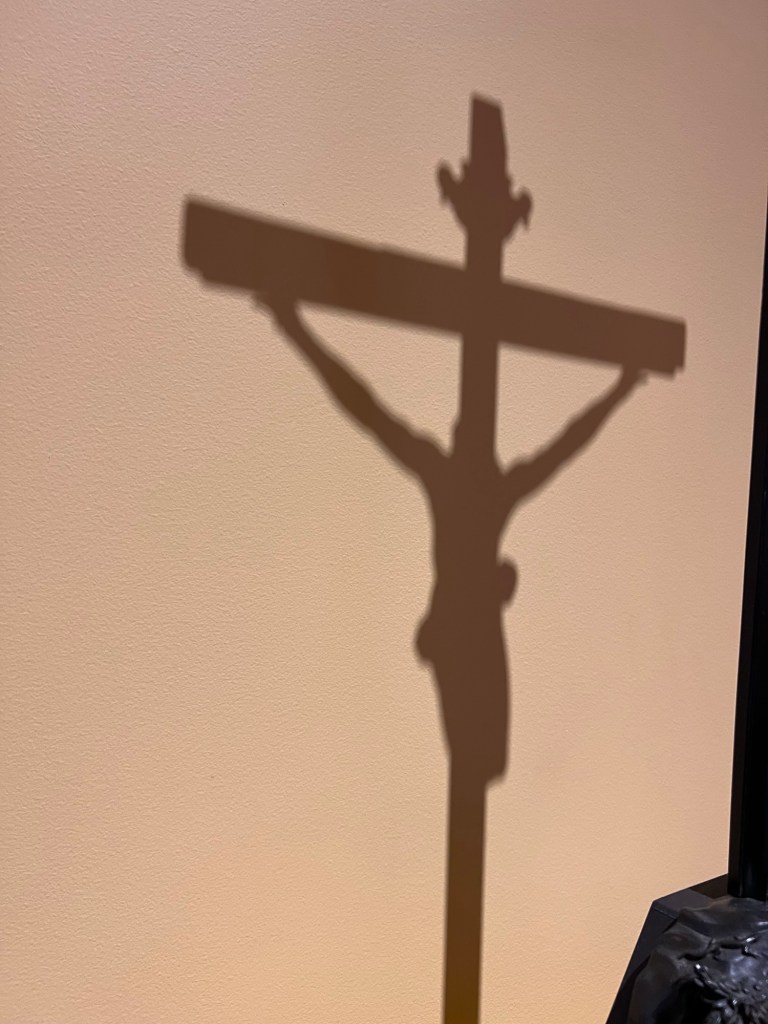
    Cross
    Verily, lift up thine eyes unto the heavens, and behold: I walk with thee.—- BUT are you though, i can’t feel it.

    There have been many moments when I’ve felt like one of God’s forsaken children. Lately, the distance between us feels like that of a 47-year-old son living 350 miles away from his dad—close enough for a human connection, yet we only communicate by phone, and half the time, nobody picks up.

    Feeling Disconnected

    I have an unconventional way of looking at life. I don’t expect everyone to understand, but perhaps the reason I feel lost and stuck is that I haven’t yet leveled up my avatar. This isn’t a moment of questioning faith or sulking because things aren’t going as expected this is my quest for patience, love, discovery, understanding, and inspiration. As if I need anyone to hand me the things that will make my life more manageable. (You can ask my wife; she’ll testify to how often I insist I don’t need anyone to do things for me.) I honestly HATE asking for help.

    Searching for Happiness

    Which way is Happy Town

    While I said I don’t feel alone, I do feel isolated in my search for happiness. Maybe my idea of happiness and joy is too cliché or too specific. Yet, this seems paradoxical because I invite and find joy in many things—my gratitude practically radiates from my face. Instead of begging or praying, I now approach life differently. I have given up the illusion of a fixed “me,” hoping that my higher self will lean in and bring more peace and happiness. I believe it will be easier to let go and watch life unfold.

    I cannot stress, wish for, or demand a savior to rescue me from my wheelchair. Then again, I’m not one for surprises—but it’s been so long since I’ve been impressed that I’d welcome a positive shake-up. Please send me a rescue team; today is my day. I remind myself daily that the more gratitude I show, the further my needs seem to run away. It’s almost as if God themself is telling me to wait. After all, there are others who need to eat, who are starving and sick there are literally fires to put out and people in power who need to be checked. But aside from all that, I believe I deserve a conversation to guide me, and I’ll take it from there.

    On Anxiety, Identity, and the Realities of MS

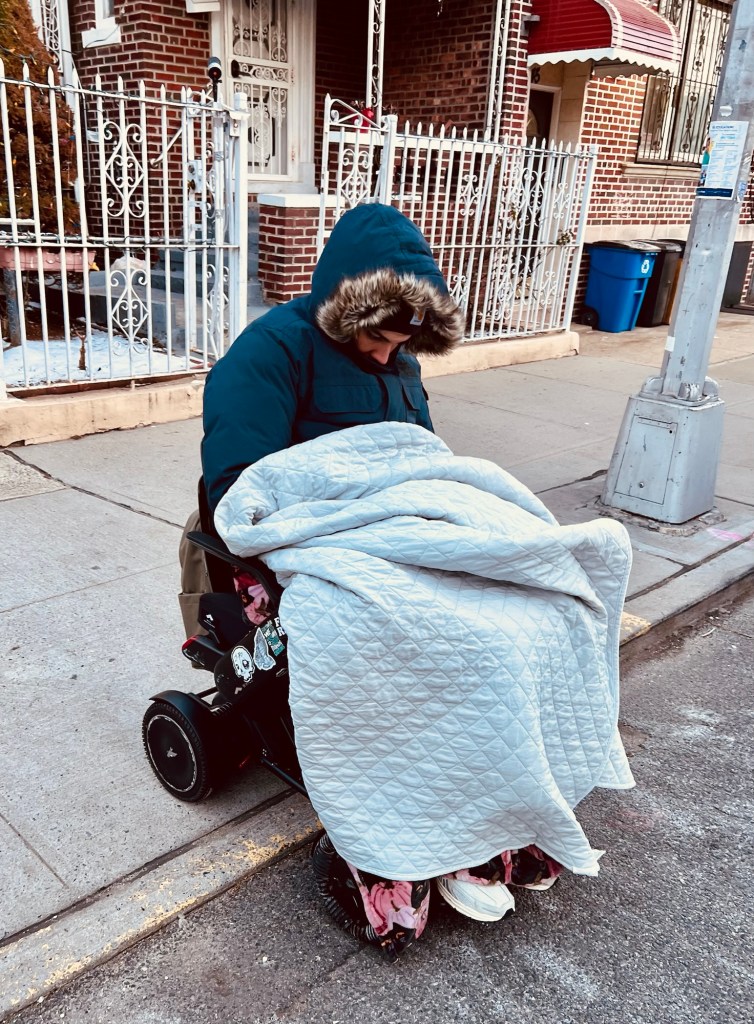
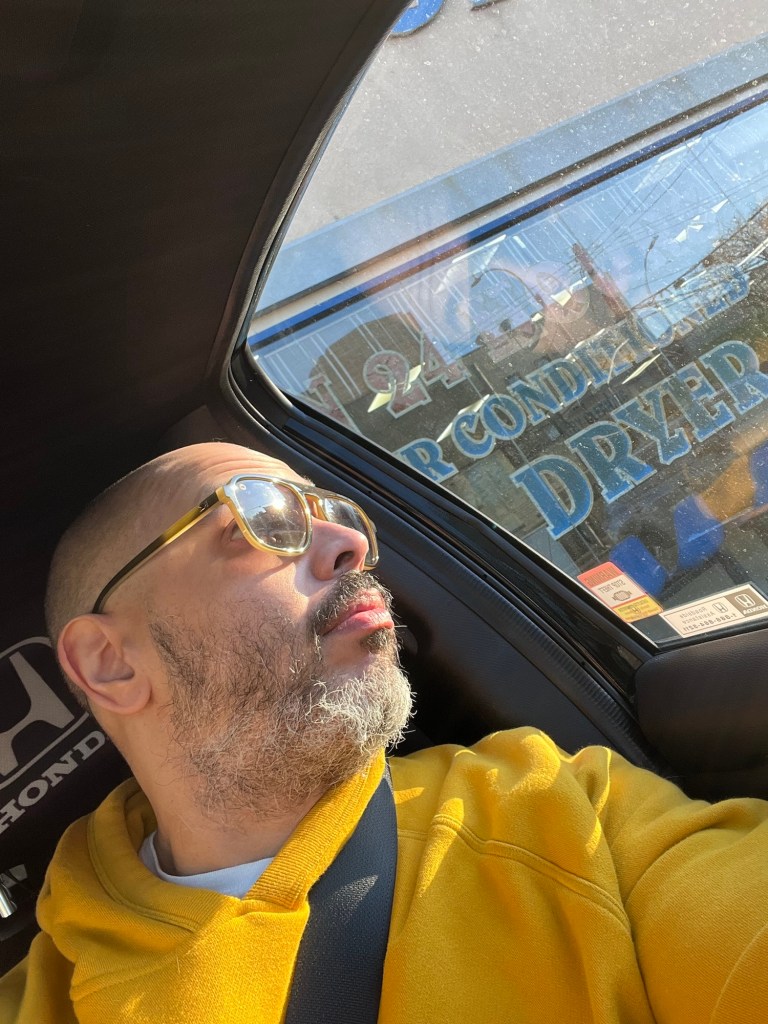
    Waiting for my Ride in the cold.

    Before anything is misconstrued, I don’t want anyone reading this to think I suffer from a mental disorder. If anything, I might greet you with anxiety and then introduce you to a bit of winter blue depression. Listen, if you live in a big city and don’t show some signs of anxiety, then are you even real? You might as well be an NPC at least here in New York, where we grumble about bacon, egg, and cheese prices and congestion fees.

    Back to my disoriented self: yes, I am confused by this reality. On one hand, I’m fighting for my spiritual freedom; on the other, I’m battling physical limitations. I’ve been a hostage to this disease (Multiple Sclerosis) for some time now, and I must deal with its impact on every part of me. I won’t lie it weighs heavily on me because I have lost so much. There are no days off for me, not even on weekends. The biggest stressors are my living situation, my work, and other daily annoyances that hinder an optimal life.

    The losses I have experienced because of MS are real, deeply personal, and sometimes impossible to articulate. The losses in certain physical abilities have not been fully mourned. It’s hard to stomach the fact that I sometimes lose my sense of independence. This disease has affected my career and the effortless daily life I once knew. These losses aren’t just about mobility or energy they touch on my identity, my relationships, and the way I move through the world.

    Transformation Through Adversity

    It may just be my day.

    Yet, I also know that loss doesn’t define me. I hope that through everything I’ve shared, you can see how I’ve found humor, leaned on love, and moved forward despite the hand I’ve been dealt. To say I lost a part of me would be a lie; instead, I have transformed. I hope that through my writing you can witness my resilience and my ability to connect and reflect on what Multiple Sclerosis has taken.

    I am literally crying as I type these final words. I want to say that I am still here, still thinking, and still spreading love the “Brooklyn Way.” I knew this disease wasn’t going to be easy. There are moments when the weight of it feels unfair and exhausting. But I also believe that in the spaces left by what’s been taken, I’ve made room for something else, perspective, wisdom, and a sharpened sense of what truly matters. And that… that’s something MS can’t touch.

    I love you, and I hope you love me too.