If you’d asked 16-year-old me what being a man looked like—well, growing up in the Lower East Side during the ‘80s, I probably would’ve tossed out something ridiculous like:
“Don’t cry. Lift heavy. Protect your people. And hey, maybe throw in a six-pack while you’re at it.”
That was pretty much the unofficial “man-up” starter pack.
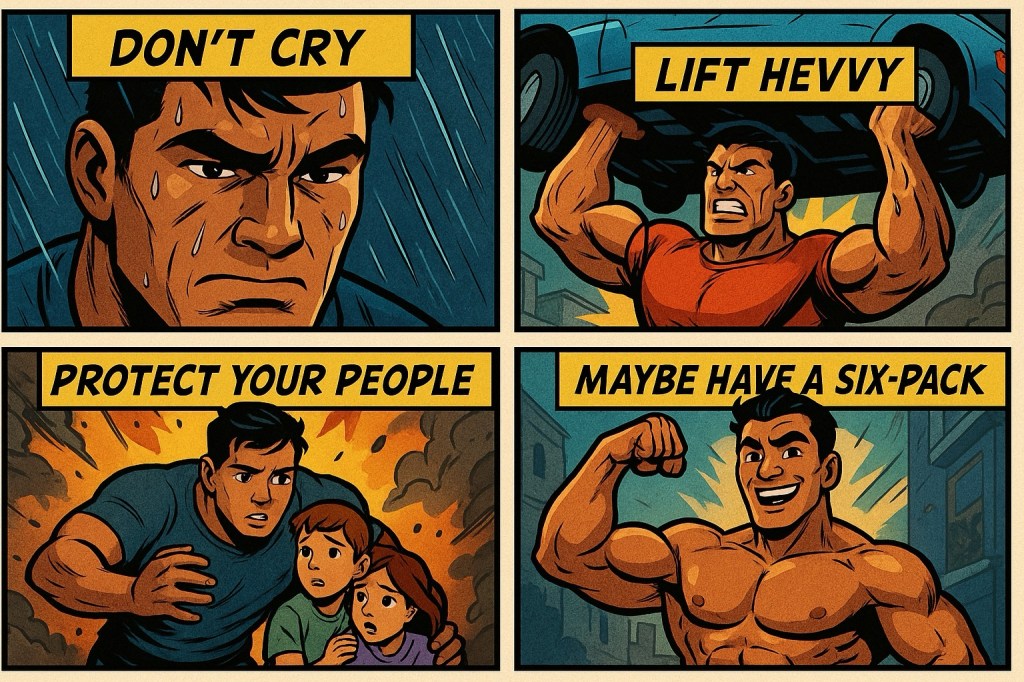
And for a long time, I stuck to it. I hauled all the groceries upstairs in one go—arms burning, pride intact. Didn’t ask for help. Didn’t admit when something hurt. I just push-through. Or poured a drink and shoved the pain somewhere quiet. Independence was everything. My body was proof I had it all together.

Then MS barged in, uninvited.
No warning. No knock. Just kicked the damn door off the hinges and said, “We’re flipping the script” get on the floor!!!! Give me all your energy!
Suddenly, my legs had their own agenda. My Energy? Came and went like a moody roommate. I went from being the one who moved the furniture to the one sitting in it, needing help just to get up. And let me tell you—there’s no section in any manhood guidebook that covers asking your wife, grown as you are, to help you out of bed just so you can pee.
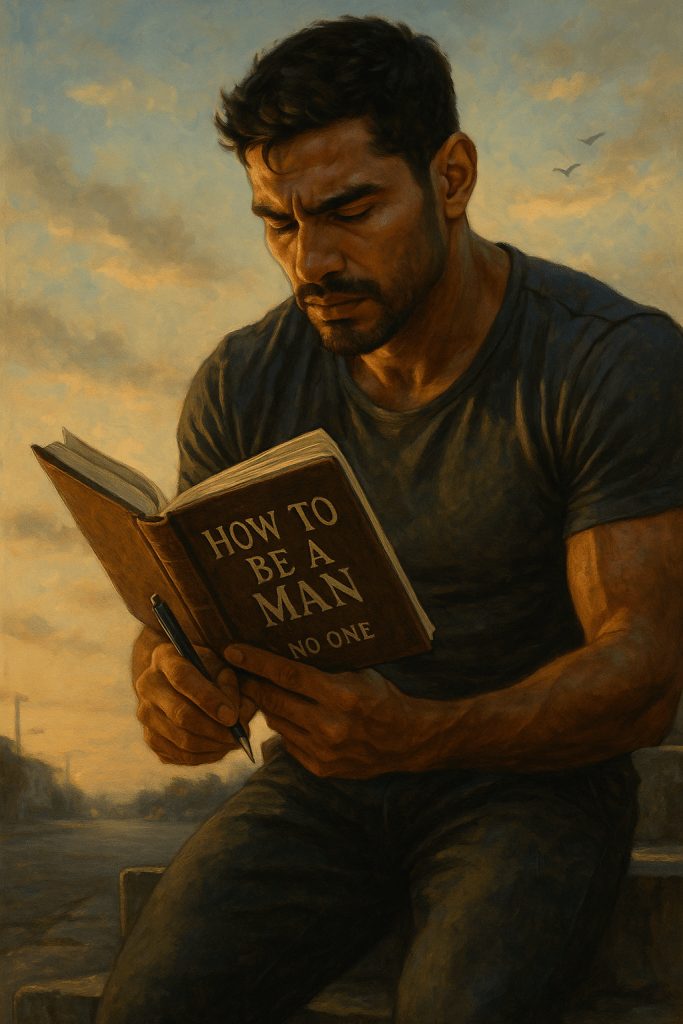
At first, I panicked. Thought maybe I was losing who I was.
Because we’re taught that strength is about action. Pushing. Lifting. Enduring. Never letting anyone see the cracks. But MS? It forced me to sit with something uncomfortable:
Real strength sometimes means stopping.
Not because you gave up—but because you finally decided to stop pretending.
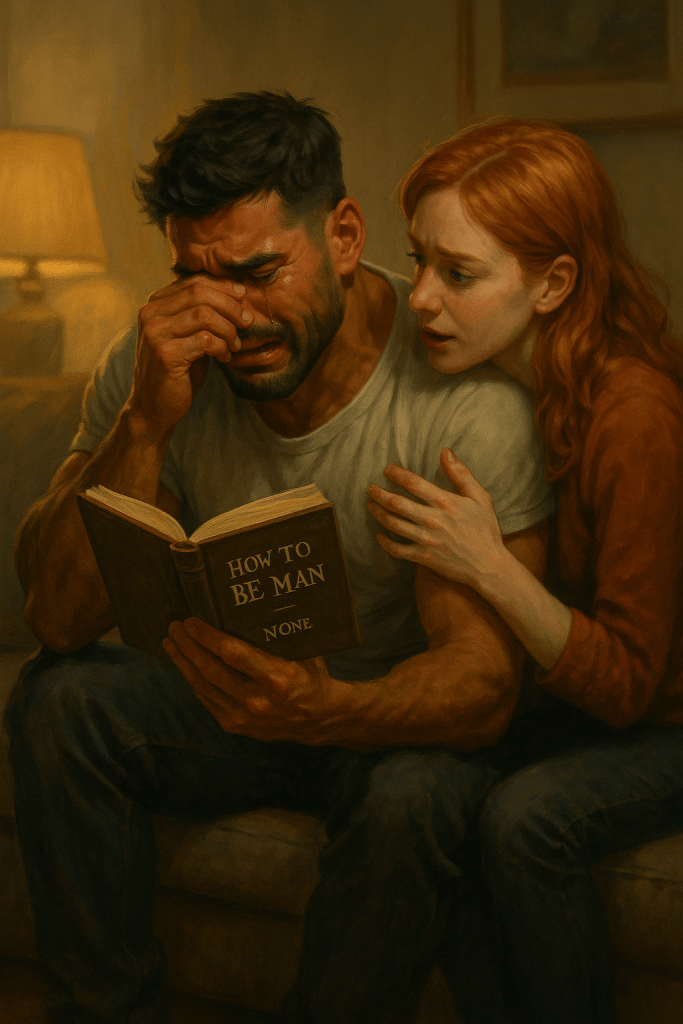
It’s letting your wife see you “Ugly Cry” without laughing them off.
It’s telling your kids, “I can’t today,” and trusting they’ll love you anyway.
It’s asking for help without feeling like you just checked your man card at the door.
And here’s the crazy thing: I didn’t lose manhood. I just had to redefine it. Not really by choice, a decision to mentally survive the long game ahead.
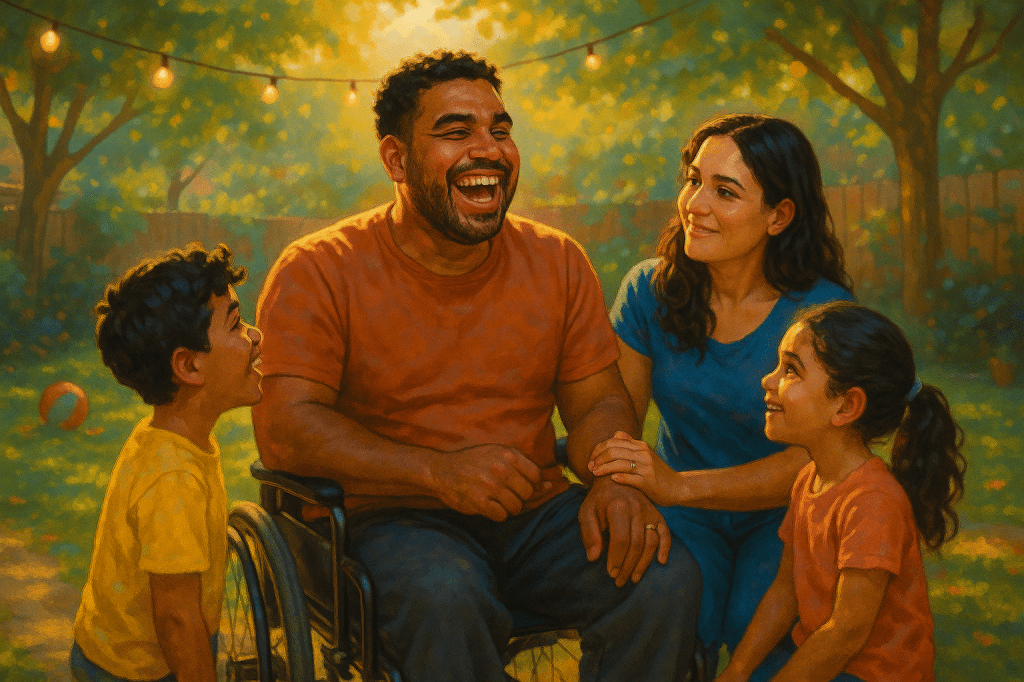
Turns out, I’m still strong—just in ways that don’t always show up in muscle. I protect my family with more than my back. I protect them with presence. With showing up, even when my legs don’t. With listening when I’ve got nothing else to give. With humor. With stubborn love.
Fatherhood feels different now. My kids don’t just remember the guy who walked them to school or made sure they had the freshest gear. They see the guy who rolls in a wheelchair and still manages to show up—who laughs, who stays soft, who still loves their mom like it’s day one. They’ve learned that being tough doesn’t mean being hard. It means staying kind when life’s been anything but.
That last sentence hit me hard as I wrote it, not gonna lie. I got a little misty eye.
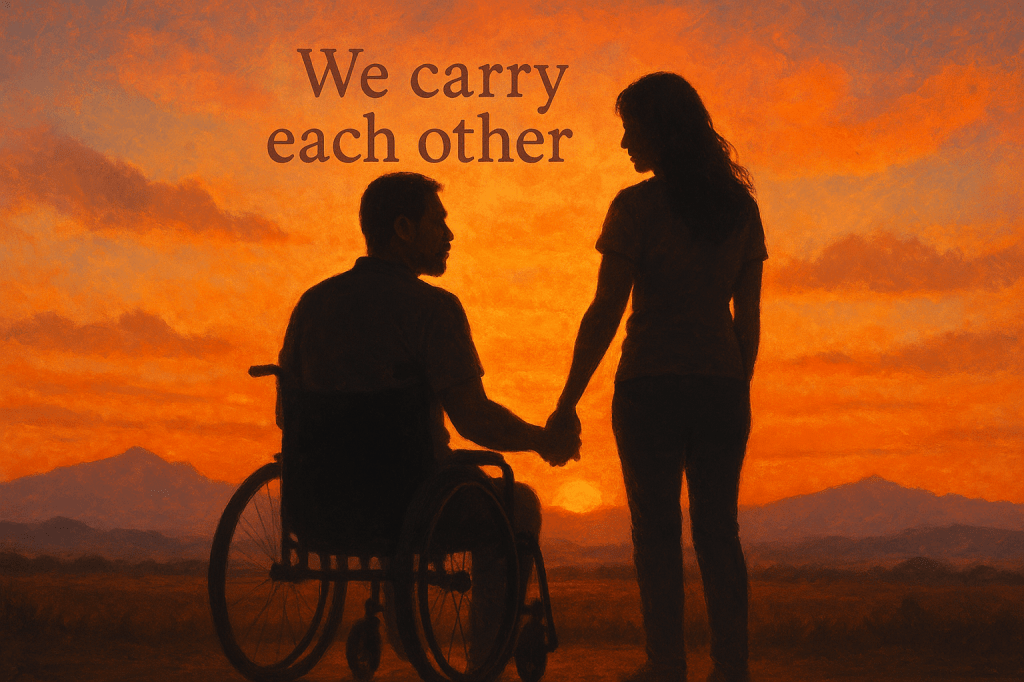
Partnership, too—it’s on a whole new level. My wife? She didn’t stick around because I can carry heavy things. She’s here because we carry each other. We’ve had the kinds of conversations that peel your ego back like old paint—where you admit you’re scared, worn out, or just need to be held. That’s not weakness. That’s trust. That’s real intimacy. That’s grown-man strength.
So yeah, I’m off the “man-up” train for good.
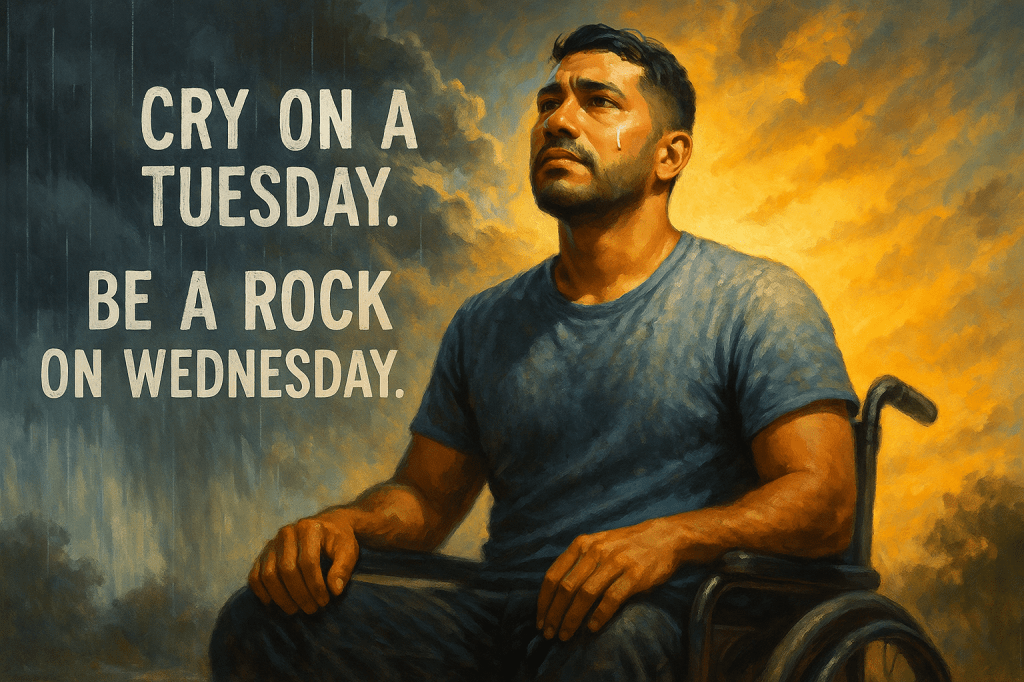
If manhood means bottling it all up, pretending nothing phases you, and dying with your pain locked in your chest—I’m not interested. I’ll take the version where you speak honestly about what hurts. Where you cry if you need to. Where you’re still the rock, just not made of stone.
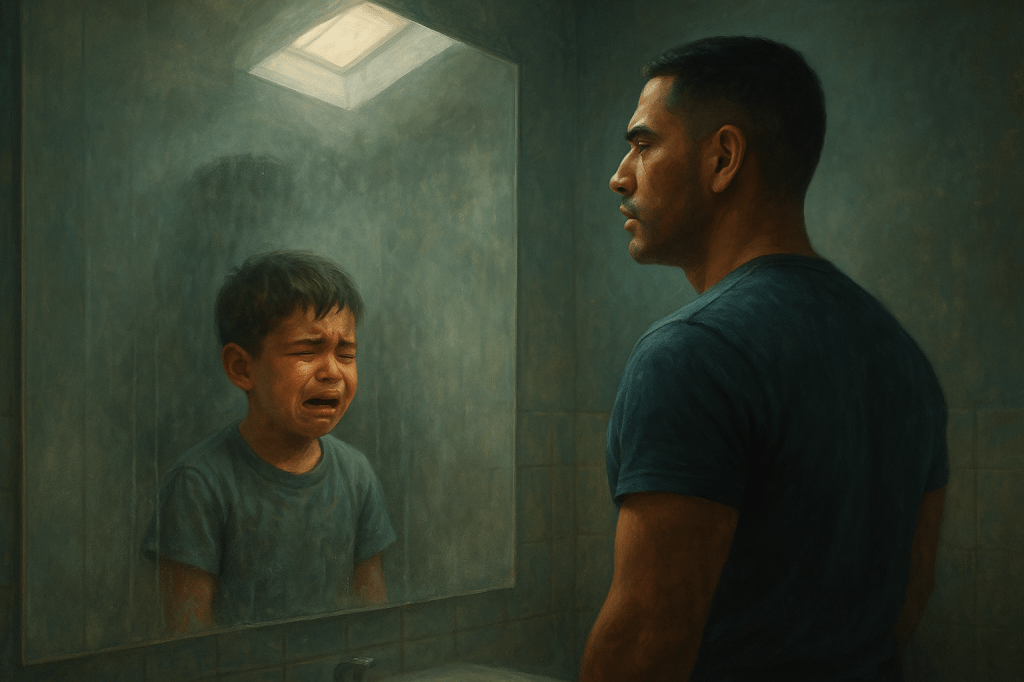
MS stripped away parts of my independence, sure. But it gave me something better:
A masculinity built on honesty. Connection. Grace. And yeah, vulnerability too.
Funny thing? That kind of strength—the kind rooted deep in who you are—it doesn’t go anywhere. Not even when your legs do.
Because strength isn’t just what you carry.
It’s what you’re willing to share.
I have not said this in a while but, “I love you and I hope you love me too”.
 Me Myself, and MS
Leave a comment